Khndzoresk – The Ancient Cave City
Where Nature Becomes Humanity’s Ally
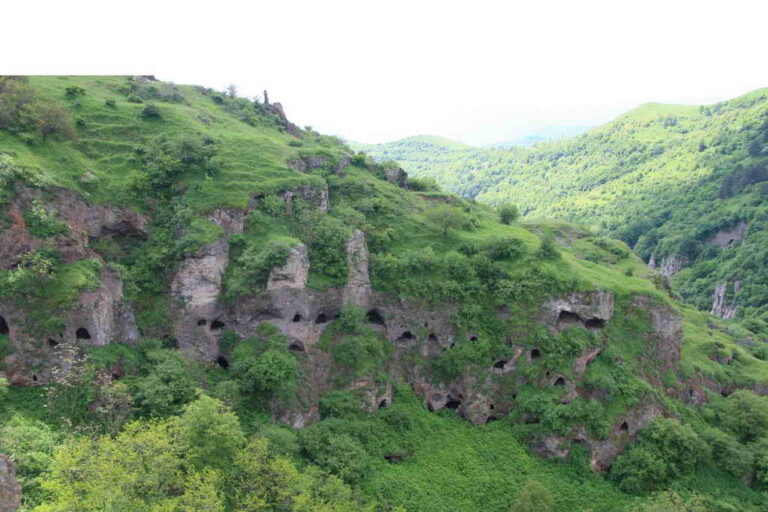 Khndzoresk is a rare example of how humans not only adapted to nature but also transformed it into an ally. The stone hills and unusual rock formations of the deep canyon give the impression of stepping into a mythical Armenia — the Armenia of legend, once said to be home to giants.
The main feature of Khndzoresk is its ancient cave city. These rock-carved dwellings served as homes for people over centuries and remained inhabited until the 1950s. From time immemorial, the canyon’s residents carved not only living spaces but also storage rooms, utility buildings, and secret shelters, turning the cliffs into a full multi-level city.
According to legend, the settlement was originally called “Khor Dzor”, meaning “Deep Canyon,” or “Khorzdoresk.” Over time, this name evolved into the form we know today: Khndzoresk.
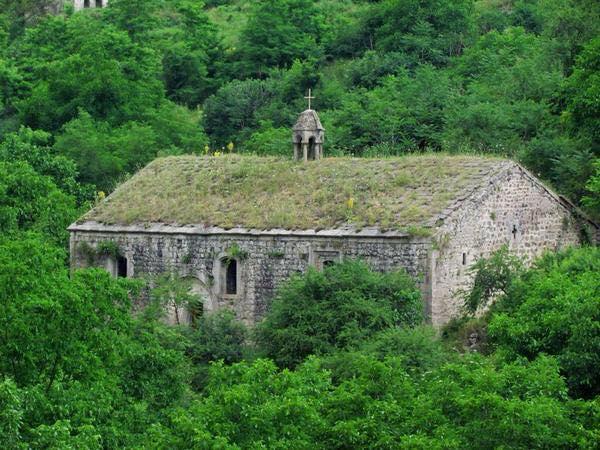 The cave city stretches approximately 3 kilometers. At its peak, it contained up to 3,000 houses and had a population of about 15,000 people. Most of the homes were carved directly into the cliffs. The village also had four churches and three schools, reflecting a high level of spiritual and cultural life even in such extraordinary conditions. The canyon is also home to the tomb of one of Armenia’s distinguished military leaders, Mkhitar Sparapet.
Khndzoresk became a symbol of indomitable spirit. The village repeatedly witnessed fierce defensive battles. All residents, regardless of age or gender, took part in protecting their home. The caves were connected by a complex network of secret passages known intimately by the locals. During attacks, people quickly moved to the more inaccessible and secure shelters carved into the steep cliffs.
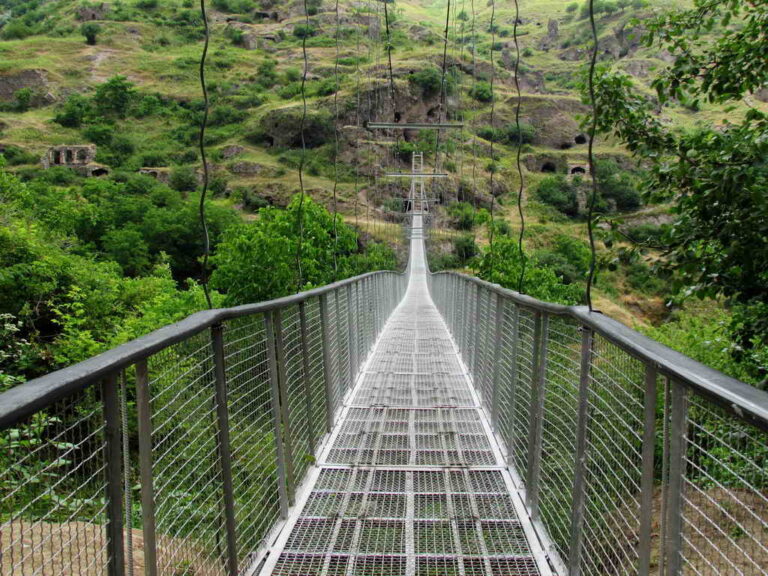 The village actively supported the liberation movement led by David Bek, and between 1728–1730, the local fortress served as the military base of Mkhitar Sparapet. In 1735, the historian Avraam of Crete visited Khndzoresk and described it in detail in his work History. Today, the canyon is connected by a suspension bridge, built in 2012. The bridge spans 160 meters in length and rises about 63 meters above the canyon floor. It has become both an engineering landmark and a new attraction for visitors, revitalizing Khndzoresk as one of Syunik’s most impressive tourist sites. Local legend says that crossing the bridge without looking back allows one to leave worries behind and begin a new chapter in life.