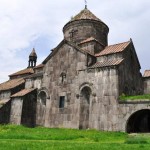
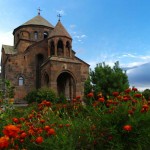
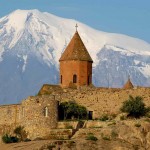
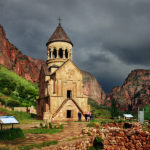
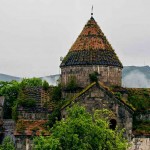
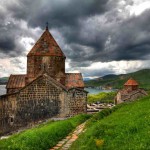
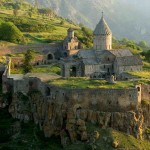
Gandzasar monastery
Gandzasar Monastery: A Medieval Armenian Treasure
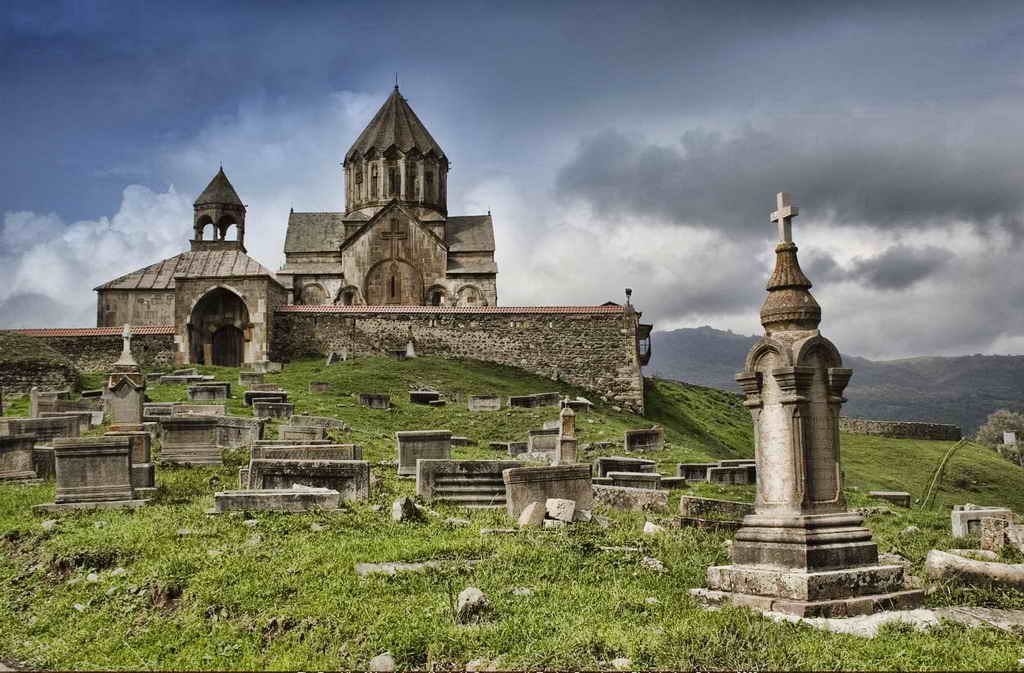
The historic Gandzasar Monastery, whose name literally means “Mountain of Treasures,” is one of the most remarkable monuments of Armenian medieval culture and a functioning monastery of the Armenian Apostolic Church. The monastery is located on the left bank of the Khachen River, near the village of Vank, in a mountainous area surrounded by picturesque landscapes.
Historical records indicate that Gandzasar was first mentioned in the 10th century by the Armenian Catholicos Anania I Mokatsi. The present cathedral was later built on the site of an earlier church by the Armenian prince Hasan-Jalal Dawla. Construction was completed and the church was solemnly consecrated on July 22, 1240. The construction of the cathedral marked an important period in the religious and cultural history of the region.
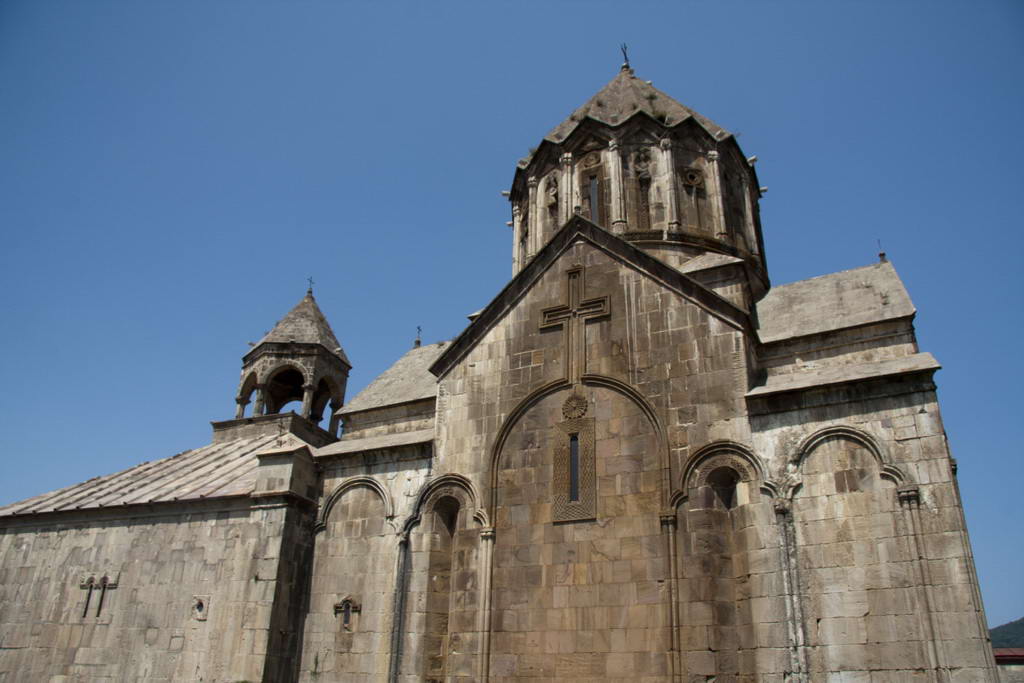
The monastery’s main church is dedicated to John the Baptist and is known as Surb Hovhannes Mkrtich. According to tradition, a revered relic — the head of John the Baptist — was brought here from Cilician Armenia during the time of the Crusades and placed within the church. This sacred relic gave the cathedral its dedication and special spiritual significance, making Gandzasar an important destination for Christian pilgrims.
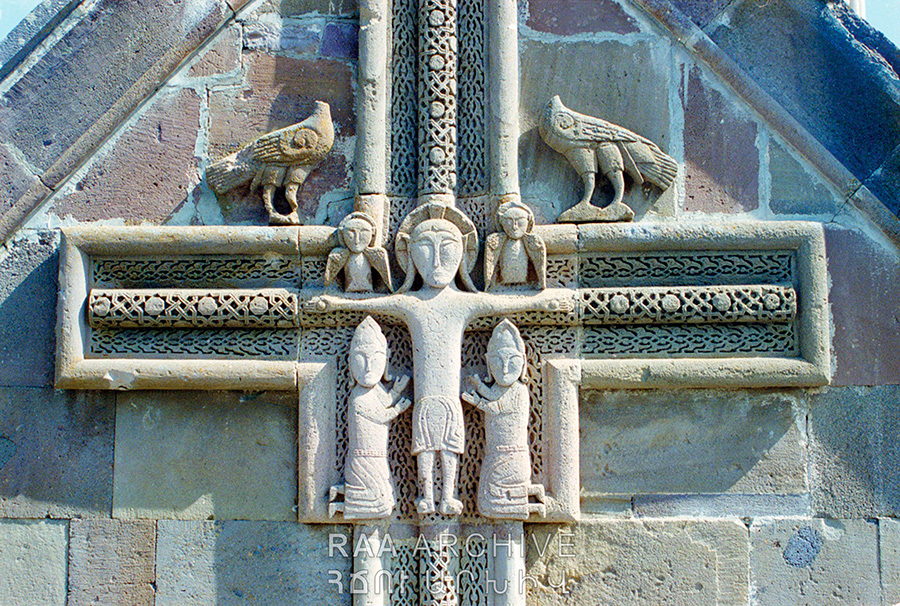
The cathedral is particularly notable for its detailed stone decoration and monumental architectural forms. The exterior features intricate carvings depicting crosses, floral ornaments, geometric patterns, and other traditional elements of Armenian religious art. These decorative details demonstrate the high level of craftsmanship achieved by medieval Armenian stoneworkers and make Gandzasar an important example of Armenian medieval architecture.
Beyond its religious role, the monastery also became an important cultural and intellectual center. Monasteries such as Gandzasar traditionally served as places where manuscripts were copied, religious texts were studied, and Armenian cultural traditions were preserved. Its location in the mountains also gave the complex a distinctive atmosphere, combining spiritual heritage with dramatic natural surroundings.
Over the centuries, Gandzasar experienced periods of political change and hardship, but the monastery remained an important symbol of Armenian faith and cultural identity. Its surviving buildings and decorative elements provide valuable insight into the architectural and artistic traditions of medieval Armenia.
Today, Gandzasar Monastery stands as a masterpiece of medieval Armenian architecture and an important symbol of the country’s spiritual and cultural heritage. Its impressive stone carvings, monumental dome, historic significance, and mountain setting continue to attract pilgrims, historians, and travelers interested in Armenia’s rich past.