Sanahin monastery
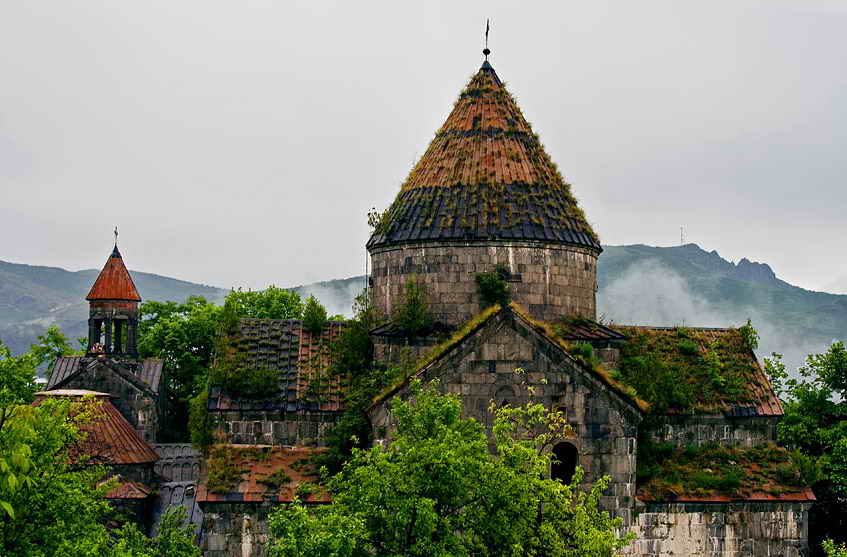
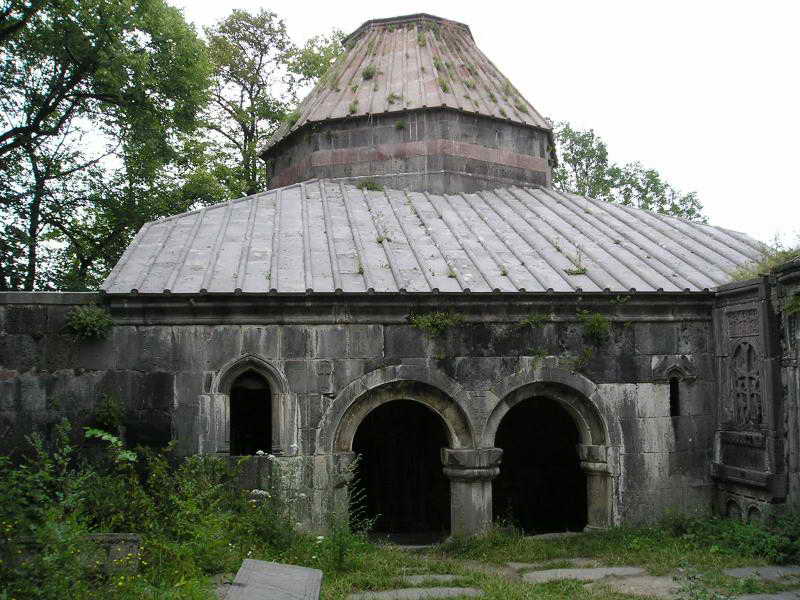
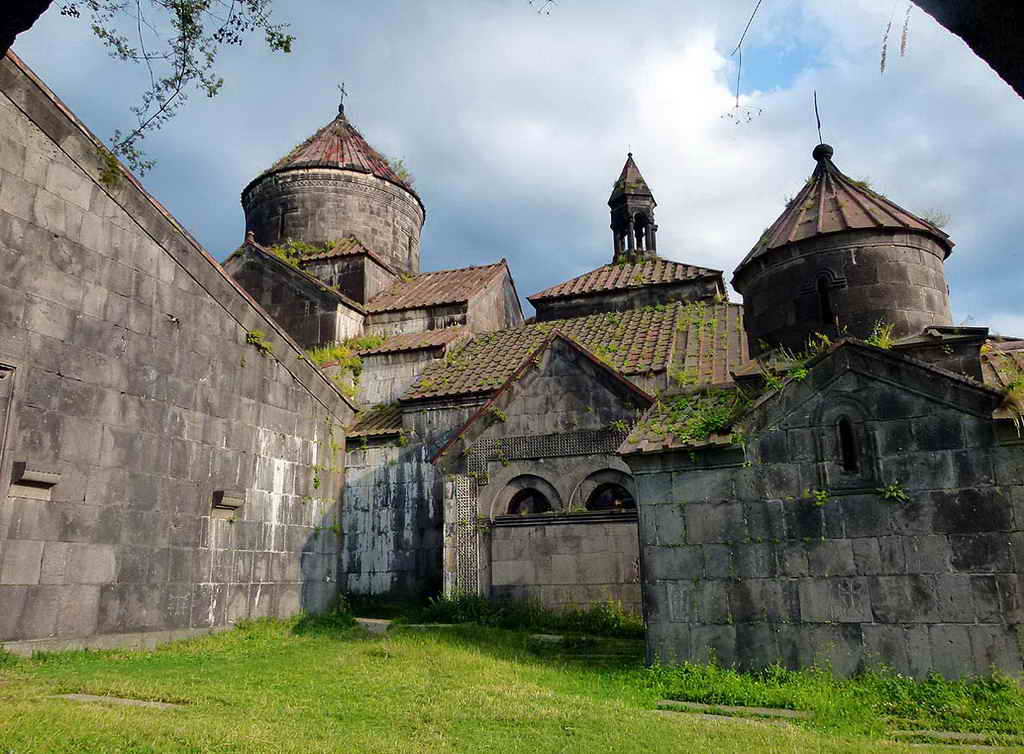
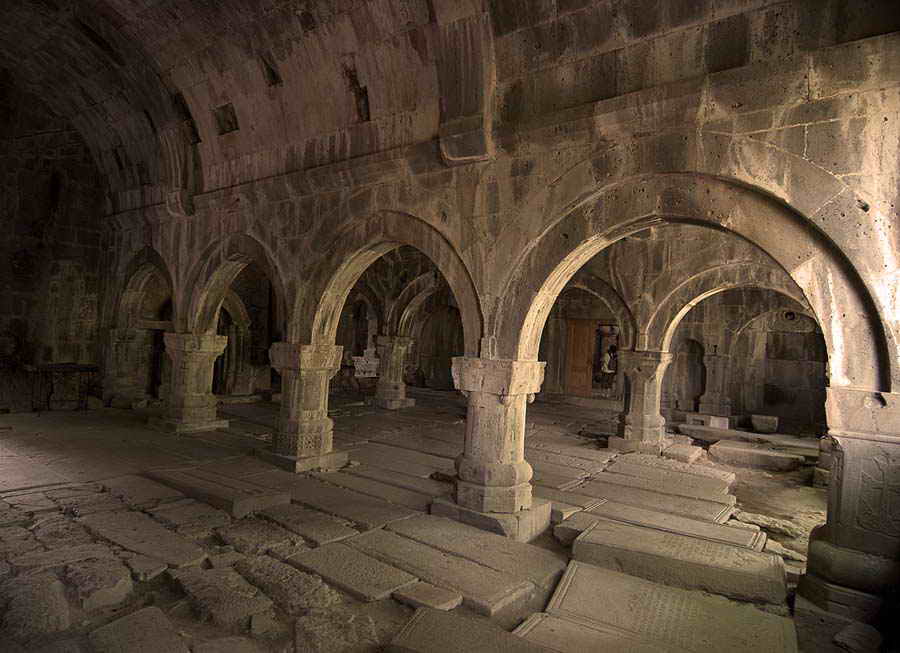
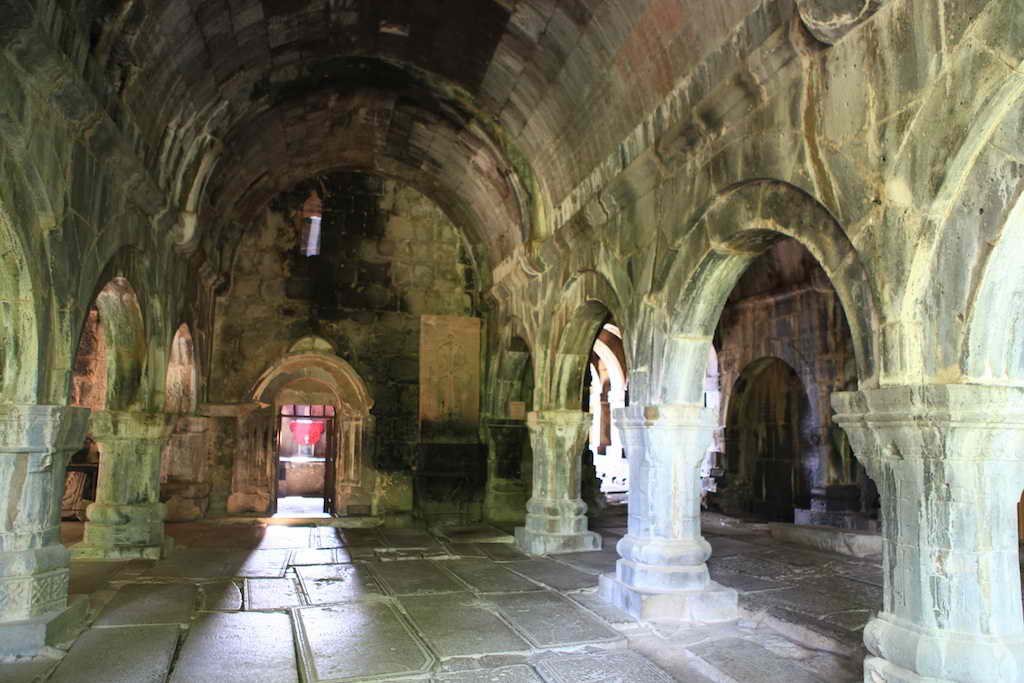
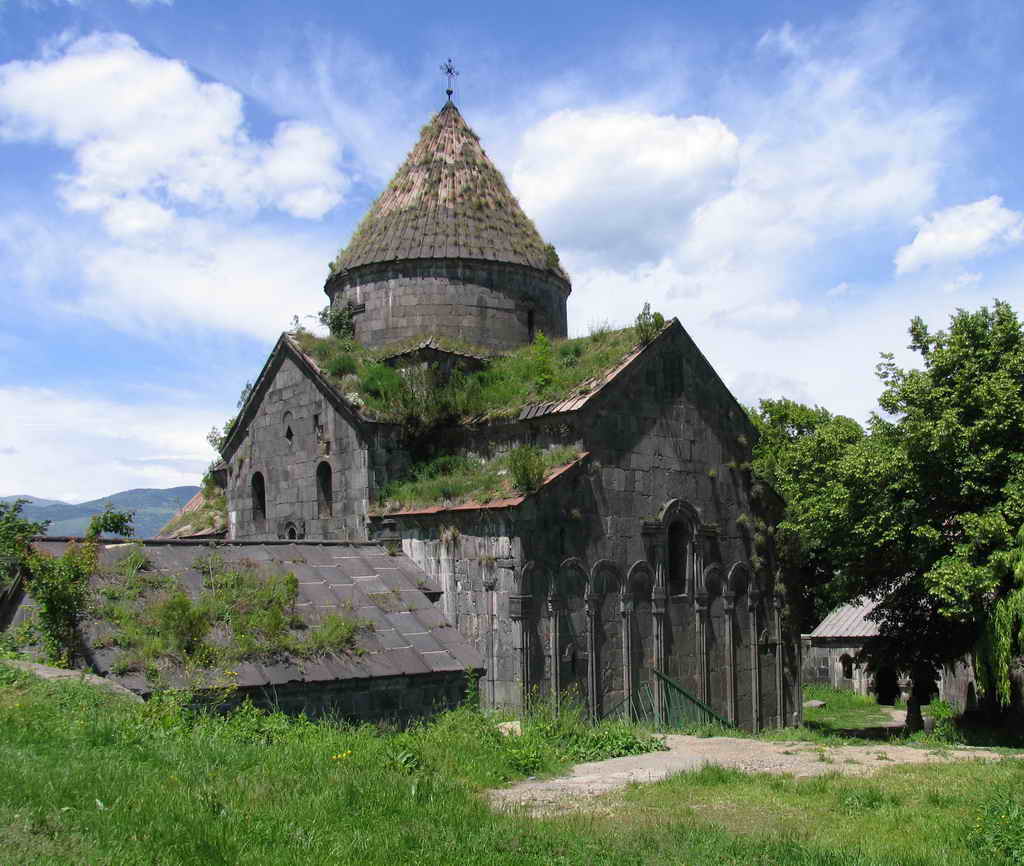
The village of Sanahin is connected to the main highway by a stone footbridge built in 1192, which is considered the oldest well-preserved bridge in Armenia. Located near the town of Alaverdi, Sanahin Monastery is one of the most famous monastic complexes of medieval Armenia. The complex includes several churches, chapels, and other important monastic buildings that reflect the rich architectural traditions of the period. During the reign of Queen Khosrovanoush, the Amenaprkich Church (Church of the Holy Savior) was built in 967 and later became the main cathedral of the monastery. In 1185, a gavit (a traditional Armenian church vestibule or assembly hall) was added to the cathedral. Later, in 1211, Prince Vache Vachutyan constructed a nakhagavit, a special entrance hall preceding the main gavit. The bell tower, dating from the 13th century, rises above the complex and overlooks the entire monastery. Another important building is the monastery library, constructed in 1063. Books and manuscripts were stored in niches carved into the thick stone walls, while the semi-columns of the structure are decorated with delicate carvings depicting birds and reptiles. Sanahin is also associated with the great Armenian poet and troubadour Sayat-Nova. It is believed that he was born here, in the birthplace of his mother. After living in Tiflis (Tbilisi) and gaining fame as a court minstrel, he later became a monk and moved to Haghpat Monastery, where he continued to play his favorite stringed instrument, the saz, even in his monastic cell. Today, Sanahin Monastery remains one of the most significant cultural and historical landmarks in Armenia and is included, together with Haghpat Monastery, on the UNESCO World Heritage List.