Zvartnots temple
The Architectural Masterpiece of Zvartnots
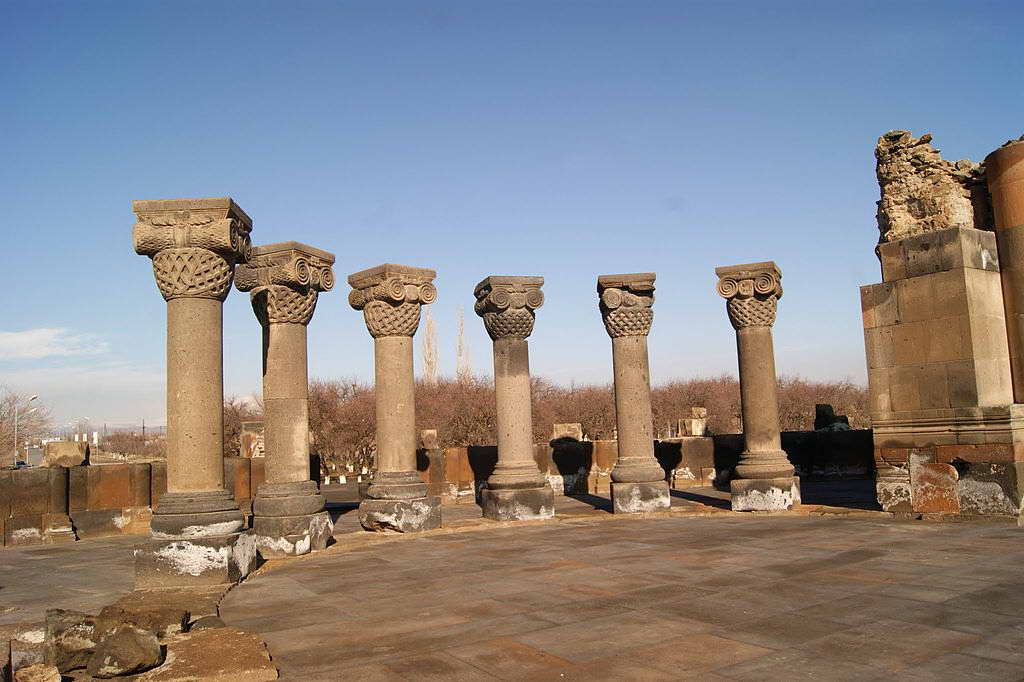
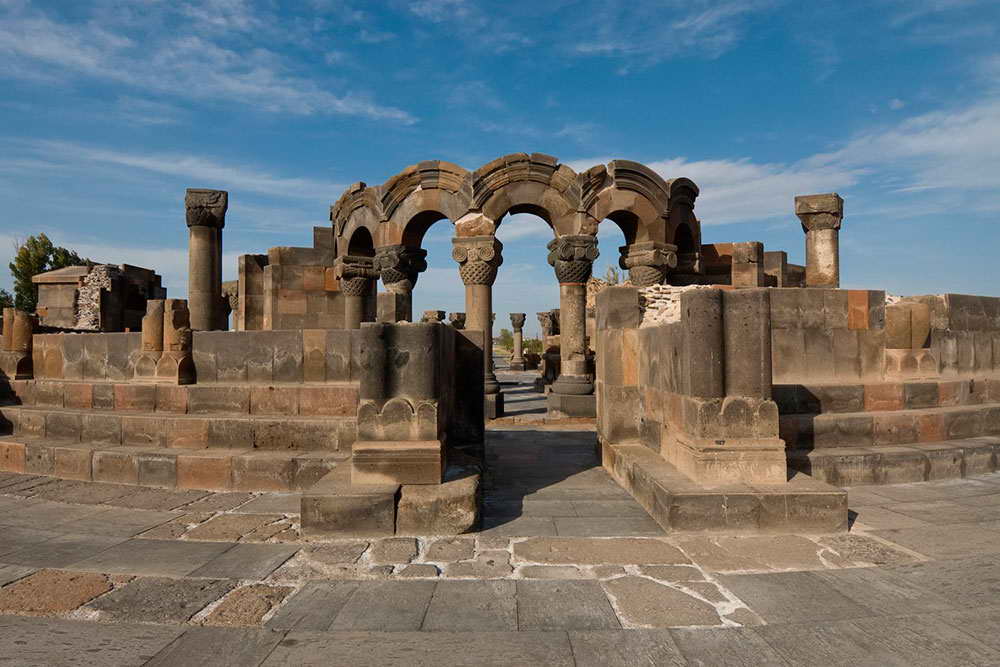
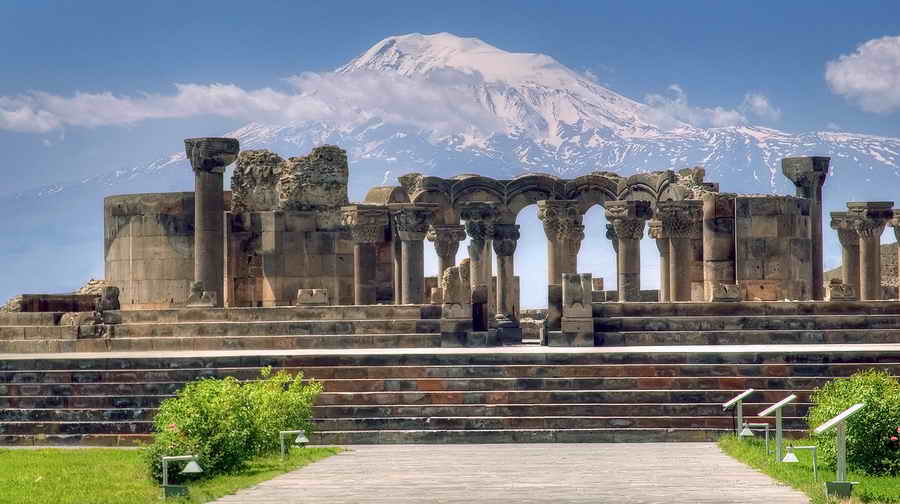
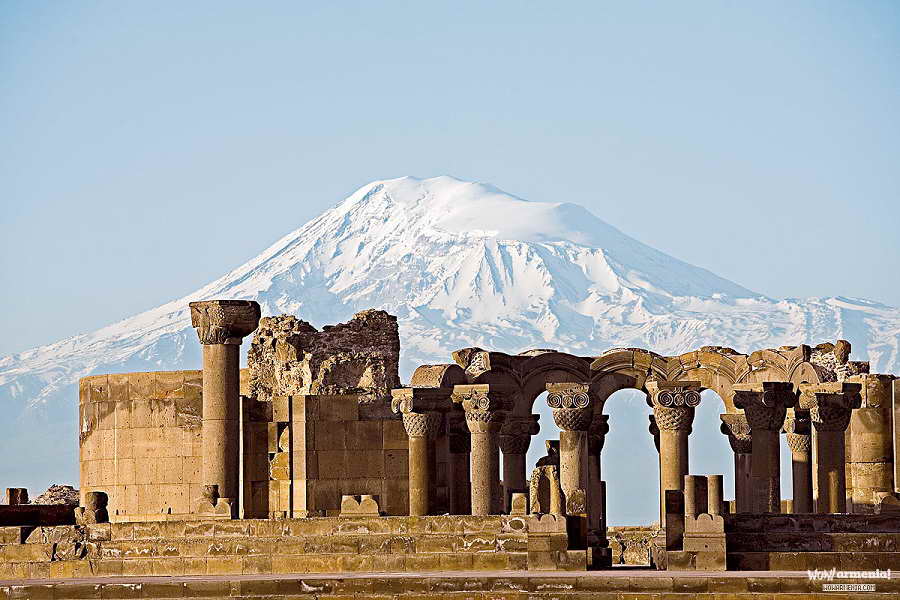
The magnificent Zvartnots Cathedral was built by the order of Catholicos Nerses III between 641 and 662 AD. This remarkable architectural monument stood for several centuries before being severely damaged by a powerful earthquake in the 10th century. The ruins remained buried for nearly a thousand years until archaeological excavations uncovered them between 1900 and 1907 near the town of Echmiadzin. Construction of the cathedral began around 643 AD, during a difficult yet transformative period in Armenian history. Armenia had just begun to recover from the devastation caused by the first Arab invasions in 640. Seeking to protect their land from further destruction, Armenian leaders attempted to establish peaceful relations with the Arab Caliphate. However, this diplomatic move provoked strong opposition from Byzantium, Armenia’s Christian ally. After the Byzantine capture of Dvin, the Armenian capital, Emperor Constantine II demanded both a political alliance and a religious union with the Byzantine Church. This would require Armenians to adopt Chalcedonian Christianity, the dominant doctrine of the Greek Orthodox world. Once again, Armenia faced a historic dilemma — choosing between the influence of the East and the West. During this political struggle, supporters of cooperation with the Arabs temporarily prevailed. Catholicos Nerses III, who strongly supported ecclesiastical unity with Byzantium, was forced to leave Armenia together with the Byzantine forces and take refuge in his native village of Ishkhan. After the Arabs were eventually pushed out of Armenia, Nerses III returned to Echmiadzin and initiated an ambitious construction project that would later become one of the greatest achievements of Armenian medieval architecture. The result was Zvartnots, a grand cathedral whose innovative circular design and monumental scale amazed contemporaries and later historians alike. Unfortunately, a series of devastating earthquakes in the 10th century led to the collapse of the cathedral. Although the structure did not survive intact, its ruins remained an important historical site. Archaeological excavations began in the early 20th century, revealing the foundations, columns, and decorative elements of this extraordinary monument and allowing scholars to reconstruct its original appearance.
Today, the ruins of Zvartnots Cathedral stand as one of Armenia’s most remarkable historical landmarks and are recognized as part of the UNESCO World Heritage Site of the Cathedral and Churches of Echmiadzin and the Archaeological Site of Zvartnots.