Meghri fortress
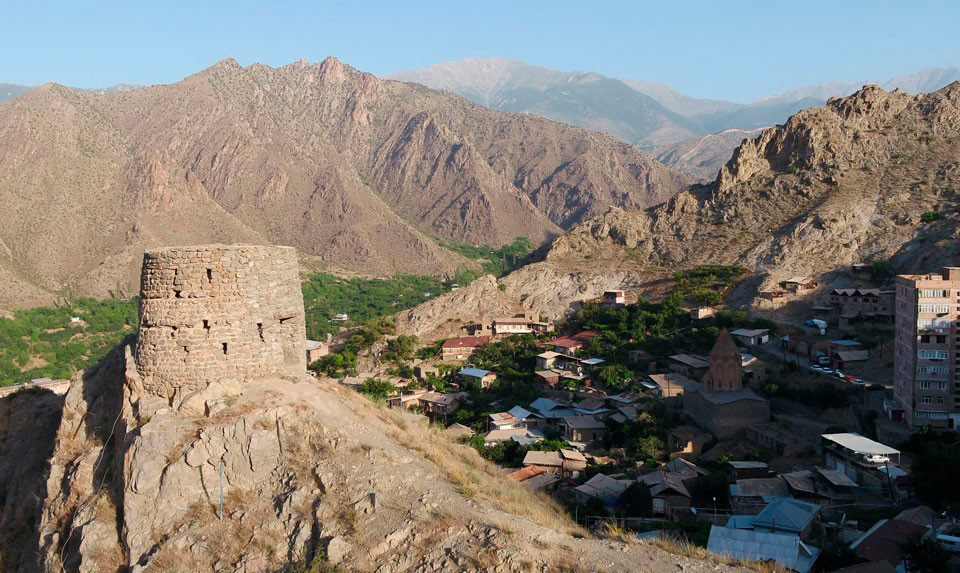
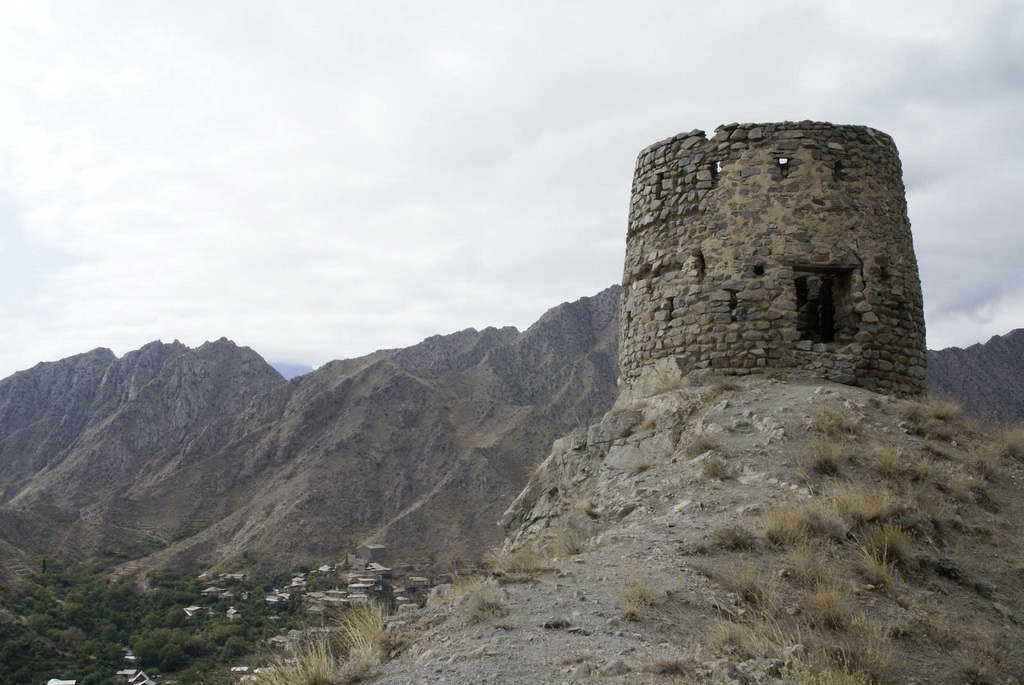
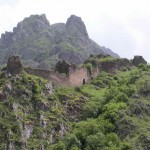
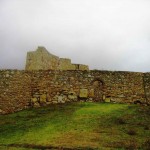
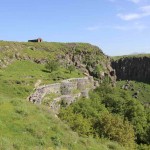
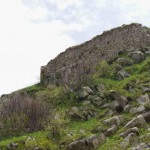
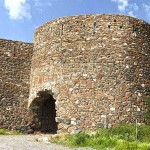
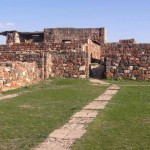
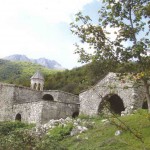
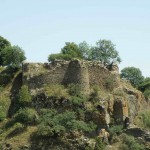
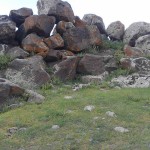
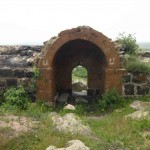
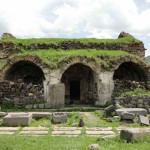
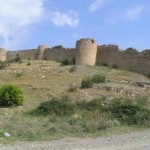
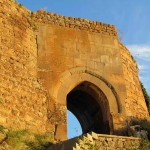
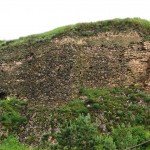
The historic Meghri Fortress is a remarkable example of medieval Armenian defensive architecture. The fortress is located on the mountain ridges surrounding the town of Meghri, forming a natural horseshoe-shaped protective barrier along its northern side. Historical records first mention Meghri Fortress in 1083, although the complex underwent significant reconstruction during the 18th century. The fortress is considered unique because, instead of traditional continuous walls, it uses the steep slopes of the surrounding mountains as natural fortifications, demonstrating the ingenuity of Armenian military architecture. Six strong towers were built along the ridge using rough granite stones. Four of the towers are circular, while two have a rectangular shape. The circular towers have a base diameter of approximately 5.5 meters. Their walls gradually narrow toward the top, increasing stability and durability. To strengthen the structures and provide protection against earthquakes, oak beams were incorporated into the construction. Each tower originally had two floors, and their walls were equipped with various openings for weapons arranged in chess-like and radial patterns, allowing defenders to observe and protect the surrounding area. During the late medieval period, when firearms became widespread, the towers were used to defend the town and control strategic points below. The southern side of Meghri was naturally protected by the Meghri River, along with fortified tower-like houses built near the riverbank, which served as additional defensive barriers.
Today, Meghri Fortress stands as an impressive monument reflecting the ingenuity of Armenian medieval fortification techniques and the strategic importance of the region throughout history.