Mount Aragats
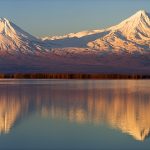
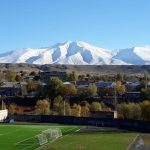
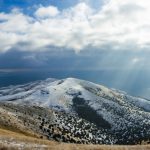
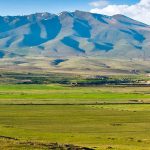
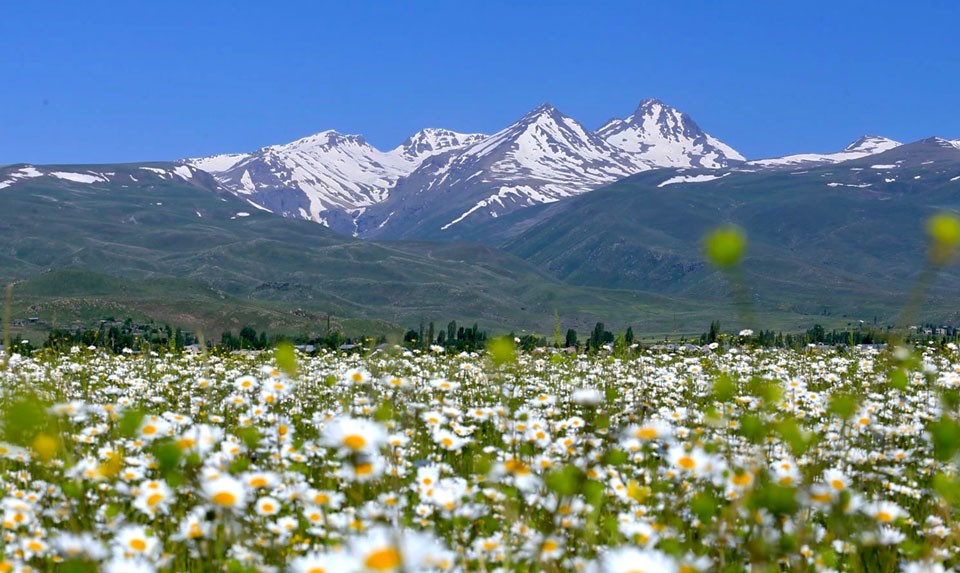 Mount Aragats is a majestic mountain massif in western Armenia, dominating the Ararat and Shirak valleys. It stretches between the Akhurian and Kasagh rivers and is visible from afar thanks to its monumental silhouette. In appearance, Aragats resembles a massive volcanic cone with jagged, serrated peaks and slopes that descend gradually toward the plains.
In terms of scale, Aragats ranks fourth within the Armenian Highlands and is the highest mountain in the Republic of Armenia. The massif has four clearly defined summits:
-
Northern Peak — 4,090.1 m (the highest point in Armenia)
-
Western Peak — 3,995.3 m
-
Eastern Peak — 3,908.2 m
-
Southern Peak — 3,887.8 m
Together, these peaks form a natural amphitheater, within which lies an ancient volcanic crater.
Origin of the Name
Several versions and legends explain the origin of the name Aragats. According to one of the oldest traditions, the name derives from the god Ara and the Armenian word “gah,” meaning “throne.” Thus, Aragats is often called the “Throne of Ara.” Another version connects the name with Aramanyak, the son of the legendary patriarch Hayk Nahapet, emphasizing the sacred role of the mountain in Armenian mythology and history.
Legends of Aragats
Armenian folklore preserves many poetic stories about the mountain. One legend tells that mountains were once giant brothers who greeted each other every morning, fastening their belts before bowing. As they grew old, they forgot to put on their belts one day before greeting each other. Angered, God turned them into mountains. Their belts became green plains, and their tears turned into cold springs that nourish the land. One of these petrified giants became Aragats.
Aragats and Ararat: The Legend of the Sisters
According to another legend, Ararat (Masis) and Aragats were sisters. A quarrel broke out between them — each believed herself to be taller and more beautiful than the other. Mount Marutuk attempted to reconcile them, but failed, and in anger cursed the sisters to eternal separation.
Masis wished Aragats a year of tears and sorrow, while Aragats cursed Masis so that no one would ever reach her summit. Aragats’ tears became numerous lakes, and Masis stood lonely and deserted. Although the legend claims that Masis is unreachable, people continue to climb its summit, defying the ancient curse.
Nature and Climate
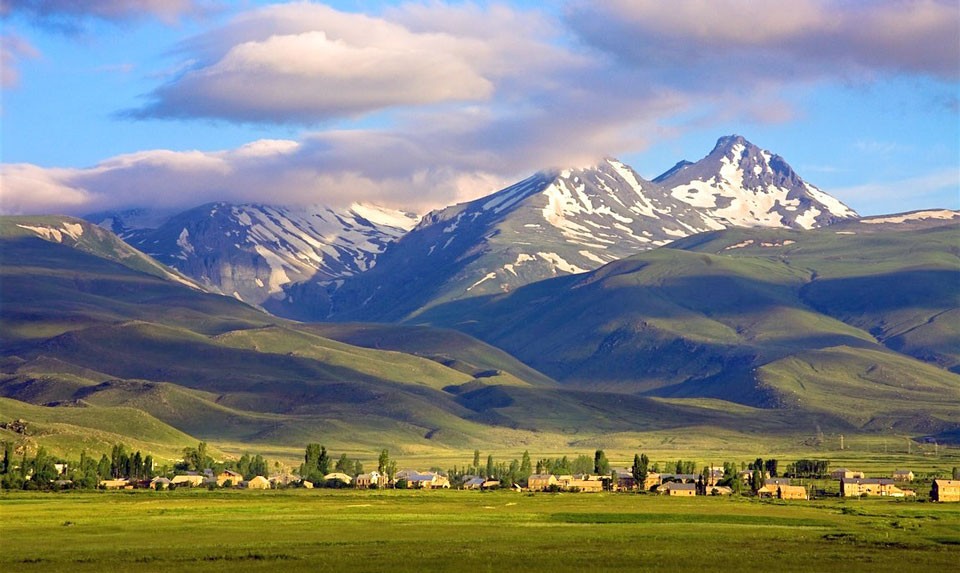 The climate of Aragats changes sharply with altitude. In summer, the lower slopes offer mild coolness, while the summit zone remains cold even during the warm season. Winters are harsh and long, with stable snow cover lasting up to 250 days a year.
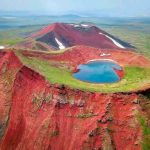
Between the four peaks lies a gigantic crater about 350 meters deep and up to 3 kilometers in diameter. The summit terrain is strongly dissected, and remnants of ancient glaciers can still be seen in the high-mountain valleys.
Lakes, Springs, and “Vishaps”
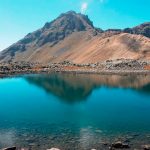
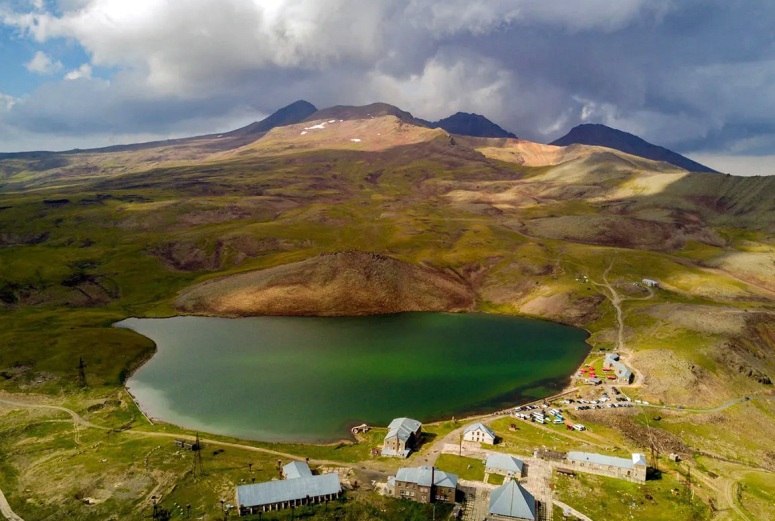 Hundreds of crystal-clear springs originate from the volcanic rocks of Aragats. Among glacial deposits, picturesque lakes have formed — Kari, Amberd, Umroy, and others. The most famous is Lake Kari, located at 3,250 meters above sea level, one of the highest freshwater lakes in Armenia.
On the mountain’s slopes stand mysterious monuments of ancient culture — stone steles shaped like fish, known as vishaps (dragon stones). These monuments are associated with the cult of water and fertility and are considered among the oldest megalithic structures in Armenia. They can be seen in the areas of Amberd, Byurakan, and on high-altitude pastures.
Science and Modern Significance
 On the southeastern slopes of Aragats lies the renowned Byurakan Astrophysical Observatory, while high-altitude meteorological stations and cosmic ray research centers operate on plateaus near the peaks. In the Mantash River valley, a large reservoir has been constructed.
Important transport routes pass along the mountain’s slopes:
Yerevan — Talin — Gyumri
Yerevan — Aparan — Spitak
Symbol and Inspiration
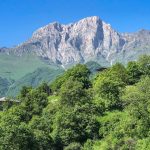
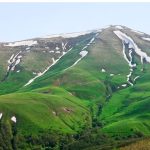
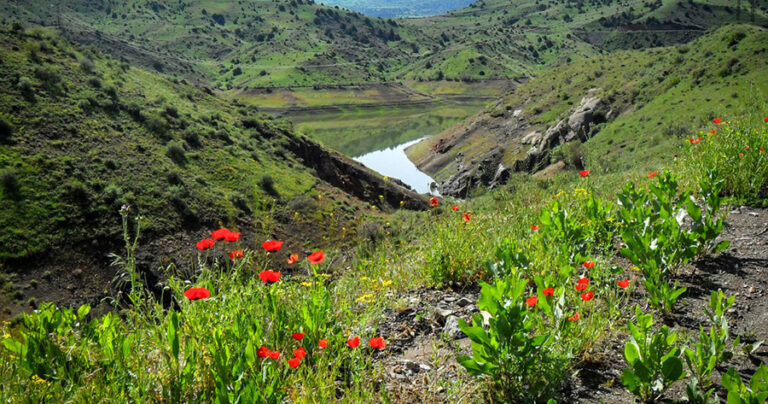 Aragats is rightfully considered one of the most beloved mountains of the Armenian people. Its slopes are covered with alpine meadows blooming with violets, poppies, bellflowers, and wild lilies. Historians believe that in ancient times the massif was covered with dense forests inhabited by wild animals.
Fresh mountain air, springs, vast pastures, and panoramic views attract tourists, climbers, and nature lovers. Aragats has been celebrated in the works of prominent Armenian figures such as Gevorg Alishan and Komitas, remaining a powerful symbol of Armenia’s natural beauty, history, and spiritual heritage.