Mount Hatis
A Quiet Peak of the Gegham Highlands
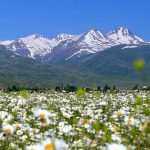
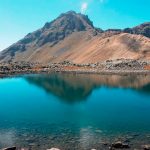
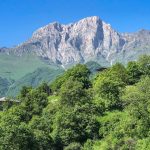
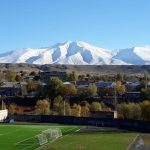
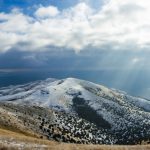
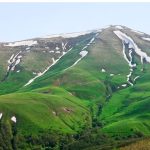
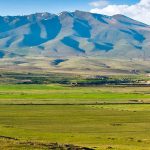
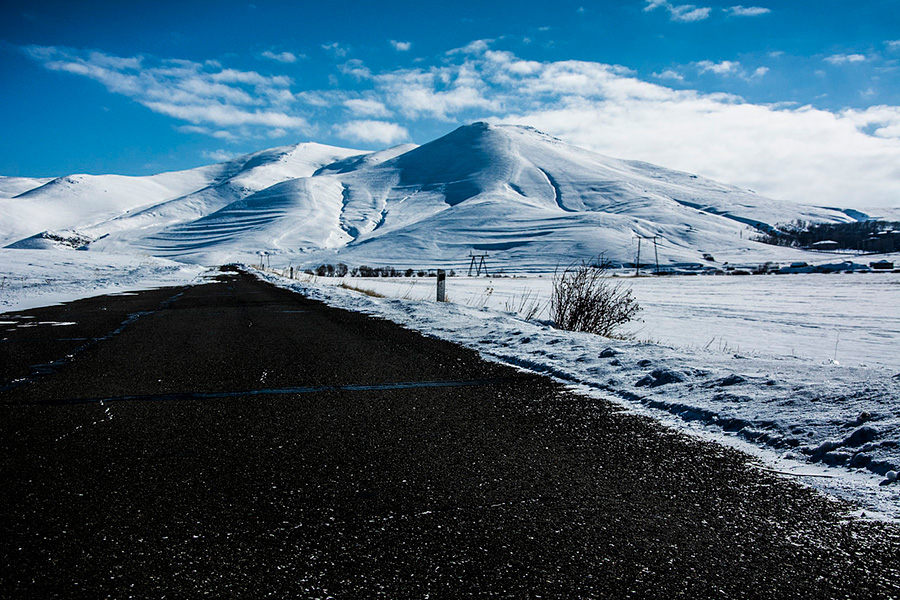 Mount Hatis — also known as Adis, Hadis, or Shamiram — is an extinct volcanic massif located in the northern part of the Gegham mountain range in Armenia’s Kotayk Province. Rising to an elevation of 2,528 meters above sea level, the mountain is clearly visible even from Yerevan. Its well-defined conical shape, steep escarpments, and sweeping alpine meadows create a striking landscape, especially vibrant during the spring and summer months.
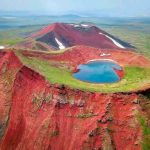
Geologically, Hatis is composed of Paleogene lava flows and perlite deposits, evidence of its ancient volcanic origins. At the southern foothills, numerous springs emerge from beneath the hardened lava layers. Known as Karasunakn — meaning “Forty Springs” — these water sources have long been regarded as life-giving and historically played an important role in sustaining nearby communities.
At the summit lies a small underground shelter referred to by hikers and climbers as the Hatis Cave. The remains of the Shamiram Fortress are also found here, their origins deeply intertwined with Armenian legend. According to tradition, these slopes witnessed the fateful encounter between the Armenian king Ara the Beautiful and the Assyrian queen Shamiram (Semiramis). The mountain’s position directly opposite Mount Ara strengthens this symbolic connection, embedding Hatis firmly within Armenia’s mythological landscape.
The name “Hatis” may trace back even further, possibly linked to the Phrygian god Attis — a deity associated with death and rebirth in nature. This mythological parallel resonates with the Armenian story of Ara the Beautiful, suggesting that the mountain may originally have been connected to Ara’s name before later becoming associated with Shamiram in popular tradition.
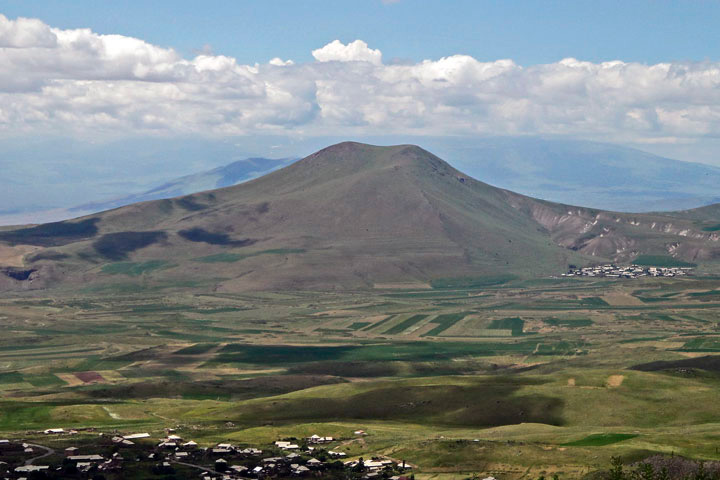 Thanks to its proximity to the capital, Mount Hatis is a favored destination for day hikes and outdoor excursions. The ascent does not require technical climbing skills, making it accessible to a wide range of visitors. From the summit, panoramic views unfold across the Gegham Mountains, surrounding alpine meadows, Yerevan, and — on clear days — the biblical Mount Ararat.
Today, Mount Hatis is evolving into not only a site of natural beauty and historical significance but also a modern spiritual and cultural landmark. A large-scale project is currently underway to construct what is planned to be the world’s tallest statue of Jesus Christ. The sculpture itself will stand 33 meters high — symbolizing the age of Christ — while the total height including its pedestal is projected to reach between 77 and 101 meters. Built from aluminum panels mounted on a steel framework, the monument will be coated with a special phosphorescent paint designed to illuminate the figure at night.
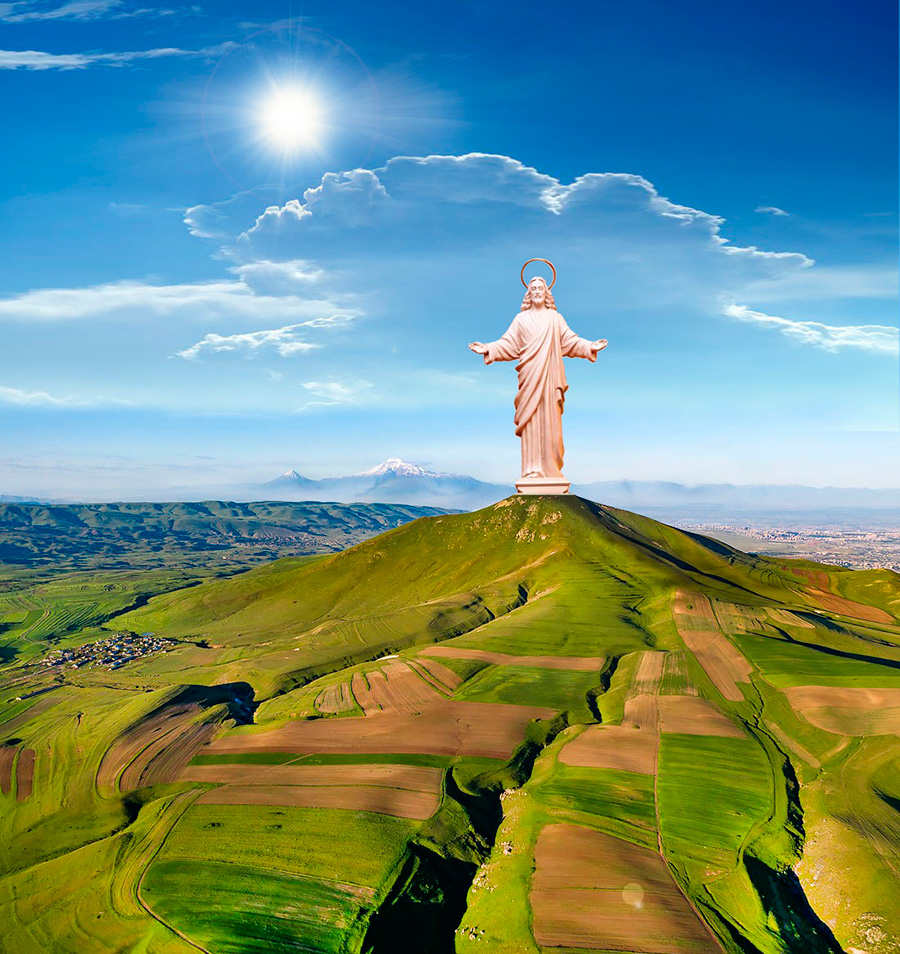 The project was initiated by businessman Gagik Tsarukyan and is being carried out under the direction of sculptor Armen Samvelyan. The broader development plan includes a museum complex, cable car access, restaurants, hotels, and viewing platforms. The location was chosen deliberately: the summit of Hatis offers expansive panoramic views over Yerevan, the Ararat Valley, and the mountain ranges of central Armenia.
Blending ancient mythology, dramatic volcanic landscapes, and contemporary architectural ambition, Mount Hatis remains one of Armenia’s most distinctive and symbolically rich peaks — a destination where legend, nature, and modern vision converge.