Mount Azhdahak
Gegham Mountains — The Volcano of Legends and Dragons
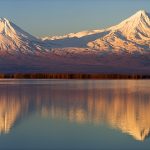
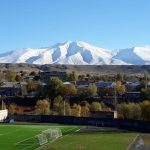
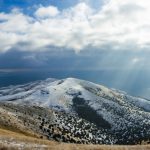
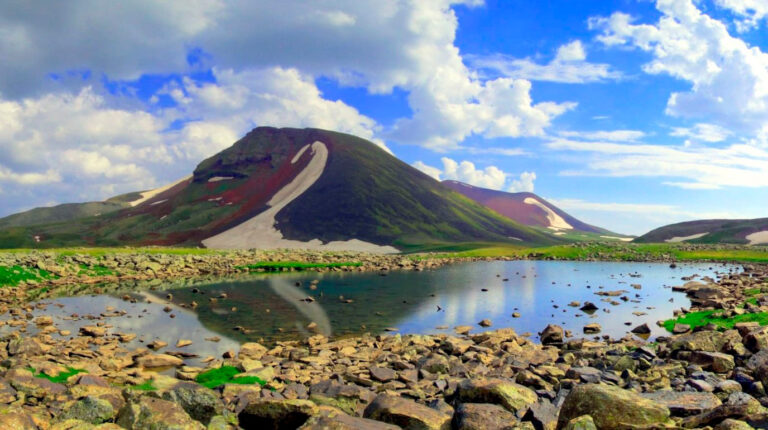 Mount Azhdahak is the highest peak of the Gegham Range and one of the most impressive summits in central Armenia. It is located at the junction of Kotayk and Gegharkunik provinces, between the Ararat Basin and the Lake Sevan basin. With an elevation of 3,597 meters above sea level, Azhdahak dominates the entire Gegham Highlands.
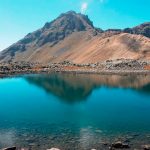
Azhdahak is an extinct volcanic cone formed during the Upper Anthropogene period as a result of powerful lava eruptions. The mountain is composed of reddish scoria, volcanic bombs, and hardened lava flows. On the northwestern side of the summit lies a large crater approximately 50 meters deep and about 500 meters in circumference, its floor filled with crystal-clear water. This high-altitude crater lake is considered one of the most beautiful natural landmarks of the Gegham Mountains.
In the central part of the range stands a volcanic massif that includes four volcanoes — Azhdahak, Kamurj, Tar, and Temablur. In addition to the main crater, Azhdahak has secondary lava vents: one on the eastern slope at around 3,470 meters, from which lava once flowed eastward and northward, and another on the southern slope, where the mountain connects with Kamurj.
Origin of the Name and Mythology
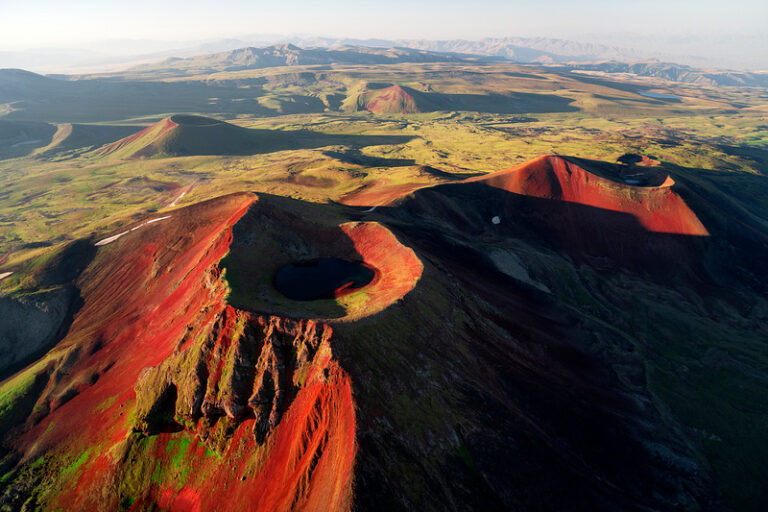 The name Azhdahak traces back to ancient Iranian and Armenian mythology. In Iranian legends, Aži Dahāka is a fearsome vishap, or dragon, whose name translates as “serpent” or “dragon.” In the epic Shahnameh, he appears as the foreign tyrant king Zahhak, who is ultimately defeated and chained by a heroic figure.
In Armenian mythology, Aži Dahāka becomes a Median king who is defeated by the Armenian king Tigran. These events inspired the epic tale Tigran and Azhdahak, in which the struggle between hero and dragon symbolizes the eternal battle between light and darkness. It is no coincidence that the mountain bears the name of this mythical dragon — Azhdahak’s harsh appearance, snow-covered slopes, craters, and vast lava fields evoke the very image of a slumbering dragon.
Vishaps and Ancient Sanctuaries
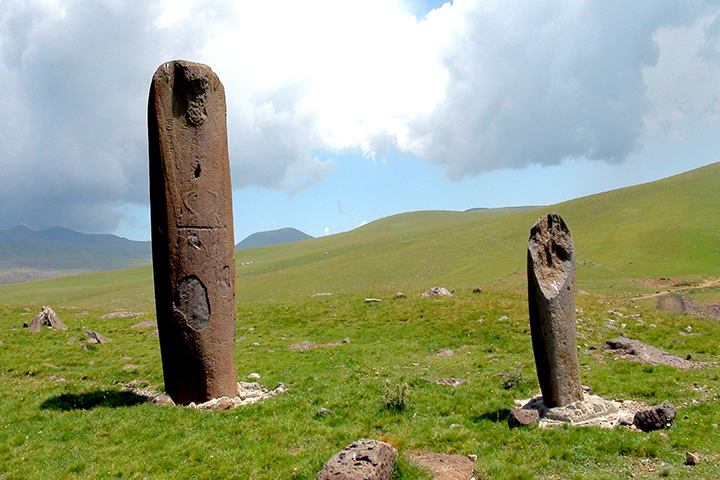 The Gegham Mountains have long been regarded as a sacred territory. The area once contained numerous stone vishaps — ancient megalithic steles carved in the shape of dragons and associated with water and fertility cults. Over time, many of these monuments were removed, particularly during the Soviet period. Today, several vishaps can be seen in Yerevan, including a large example displayed near the government building.
In the mountains themselves, two vishaps remain standing near Lake Vishap, also known as the Dragon Lake. The lake measures about 500 meters in diameter and reaches depths of up to 90 meters. Along the route to Azhdahak, visitors can also encounter ancient petroglyphs carved into volcanic rock, dating back to prehistoric cultures of the Armenian Highlands.
Nature and Landscapes of the Gegham Mountains
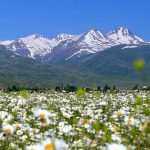
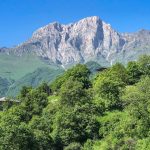
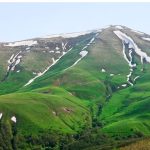
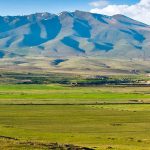
The Gegham Range is a volcanic chain stretching between the Sevan and Ararat basins. Up to approximately 2,800 meters, mountain-steppe landscapes dominate, while higher elevations transition into subalpine and alpine meadows. For much of the year, Azhdahak remains snow-covered, and its slopes appear stark and almost uninhabited.
From the summit, panoramic views unfold across the Gegham Highlands and the mountains of central Armenia. On clear days, vast lava fields, volcanic craters, and high-altitude plateaus create a powerful sense of untouched wilderness and remoteness from civilization.
Climbing Mount Azhdahak
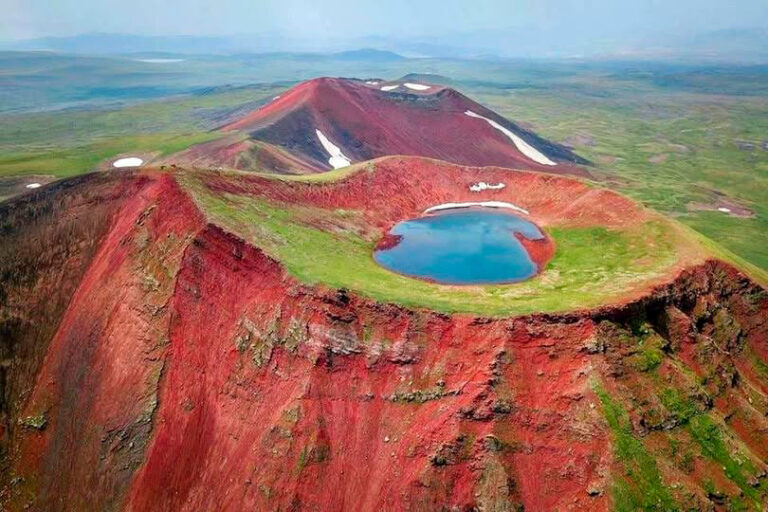 The ascent and descent of Azhdahak typically take between six and eight hours and are suitable for hikers with moderate physical fitness. The route passes through alpine meadows, lava plateaus, and wide open landscapes, culminating at the striking crater lake atop the volcano.
The western slopes of the Gegham Range are traditionally used by Yazidi communities for seasonal grazing. Their summer camps add ethnographic interest to the journey, and local shepherds are known for their hospitality. Despite being only about 26 kilometers from Yerevan, Azhdahak is not considered an easy самостоятельный hike. In winter, the mountain is largely inaccessible, and even in warmer months, ascents are recommended only with an experienced guide.
Azhdahak is more than a mountain — it is a unique destination where dramatic volcanic landscapes intertwine with dragon legends, ancient cult traditions, and the tangible presence of history preserved in stone and silence.